
Offensive security
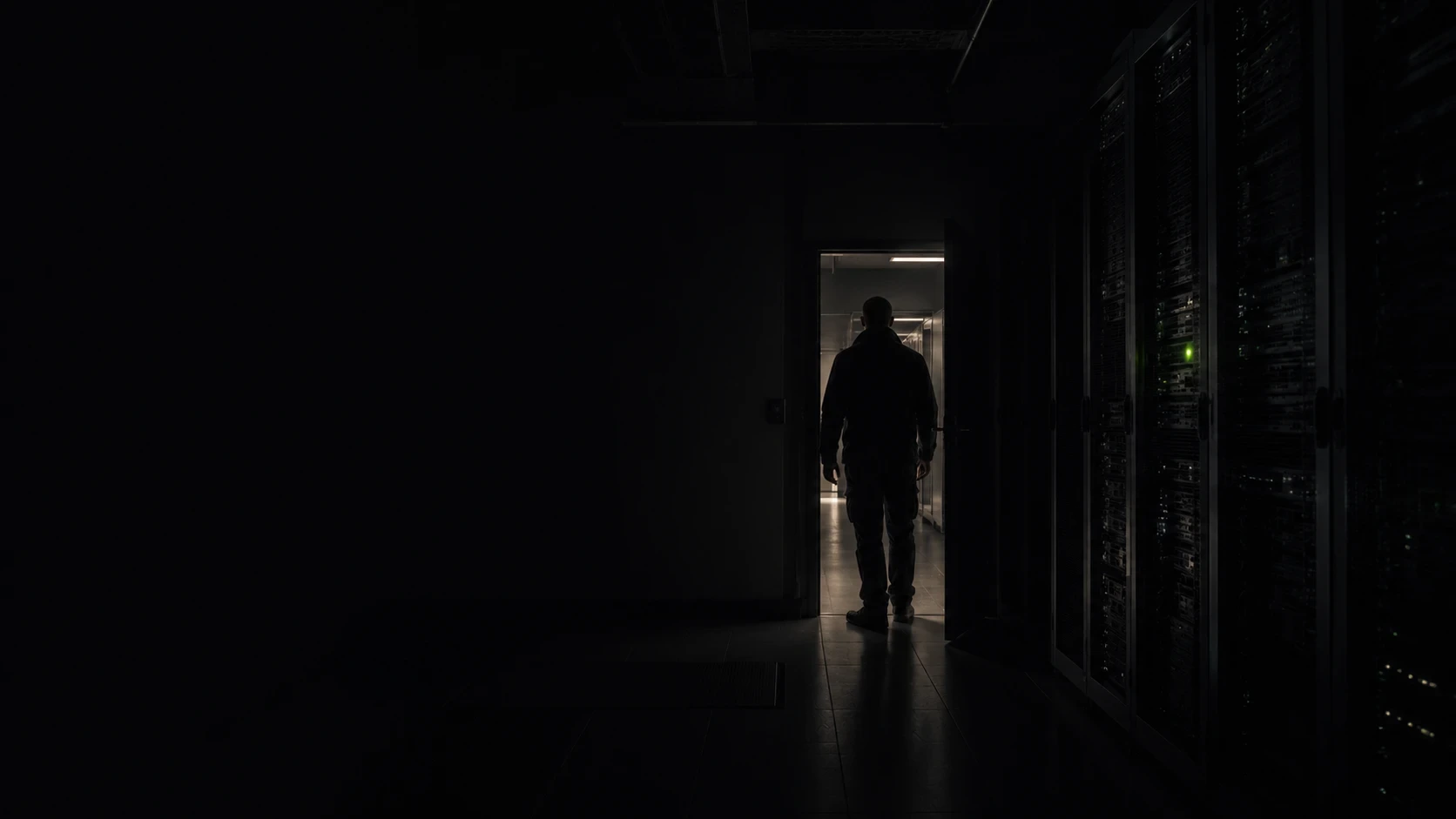
If an attacker were inside your network right now, would you even know?
Most businesses can't answer that. Attackers don't always break in. They log in with a password from an old breach, or one click from a busy employee. And the moment they're inside, most companies go dark.
The blind spot
Every business guards the front door. Almost none can see what's already inside.
Firewalls, endpoint protection, email filtering, it all assumes the threat is still trying to get in. But a stolen login looks like a normal login. The real question isn't how you keep them out. It's how far they could get once they're in, and whether anyone would even notice.
The blind spot, quantified
0 days
That's how long the average network breach goes undetected.
More than six months for someone to move through a network, reach what they want, and prepare, while every tool reports normal. The break-in was never the dangerous part. The blindness after it is.
You can't manage the risk you can't see.
What you walk away with
For the first time, you'll know exactly where you stand.
Not theoretical risk from a benchmark. Your real exposure, on paper, with proof, while you still have time to act.
What's actually reachable
Exactly what someone could open from the inside: which files, which accounts, which systems.
How far it goes
How far an intruder could move through your network before anyone noticed, mapped out.
Whether you'd catch it
A straight answer on your detection: would your tools actually fire, or stay quiet.
What to fix first
Your real risks, ranked for your environment. A short list you can start on Monday.
Who it's for
If you've got security tools but never tested them from the inside, start here.
The Shadow Network Assessment is built for you if:
- You've invested in security tools but never seen what they miss.
- You passed a scan or a review and you're not sure that's the same as being secure.
- You don't actually know what an attacker could reach once they're past the perimeter.
- You want proof of your real exposure, not another risk score.
How it works
You plug us in. We move the way an attacker would. Then we show you everything.
- 01
We ship you a device
A small box arrives at your location. No setup expertise needed. It looks unremarkable, on purpose.
- 02
You plug it in
From that moment our engineers have the same inside access a criminal would have after getting past your perimeter.
- 03
We go to work
We probe, harvest credentials, move laterally, and escalate, the same things an attacker would try. We document every step.
- 04
We show you everything
A clear report: what we reached, how far we moved, whether anything caught us, and what to fix first.
What we actually find
This isn't theoretical. Here's what we've done inside real networks.
We've run this against networks that had just passed a security review. Clean scans, confident teams. With permission and a clear scope, here's what we've been able to do:
Known holes, left open
Documented security holes still wide open, because the patches that would have closed them were never installed.
Free movement inside
Moved from one system to the next and opened server file shares we should never have been able to reach.
The keys to everything
Pulled the network administrator's own username and password, the one account that controls it all.
Different networks. Different findings. The one constant: our activity went completely unnoticed. No alarm. No alert.
Questions we hear
Common questions
What is the Shadow Network Assessment?
An inside-out look at what an attacker could do once they are already in your network. Our engineers gain the same inside access a criminal would have after getting past your defenses, then move the way a criminal would and document everything they reach. It shows you the blind spot most businesses never see: what happens after the break-in, not whether the front door holds.
How is it different from a vulnerability scan?
A vulnerability scan is an automated list of possible weaknesses and a risk score. The Shadow Network Assessment uses real engineers using real attacker techniques from inside your network, and every finding comes with proof of what was reached and how. Evidence, not a list.
Why does looking from the inside matter more than testing the perimeter?
Because attackers don't always break in. They log in with a stolen password, or they trick someone into letting them in. Testing whether your perimeter holds tells you nothing about what happens after someone is already past it, and that gap is exactly where breaches go undetected for an average of 197 days.
What do I get at the end?
A clear report showing what our engineers reached, how far they could move, whether your tools caught any of it, and where your real risk lives, based on your specific network rather than an industry benchmark. Plus a straight conversation about what to do next.
See your blind spot before someone else does.
Start with the free Exposure Snapshot. In seconds it shows what a criminal can already find about you from the outside, the exposed passwords and systems that become the way in. When you're ready to see what they could reach inside, that's the Shadow Network Assessment.